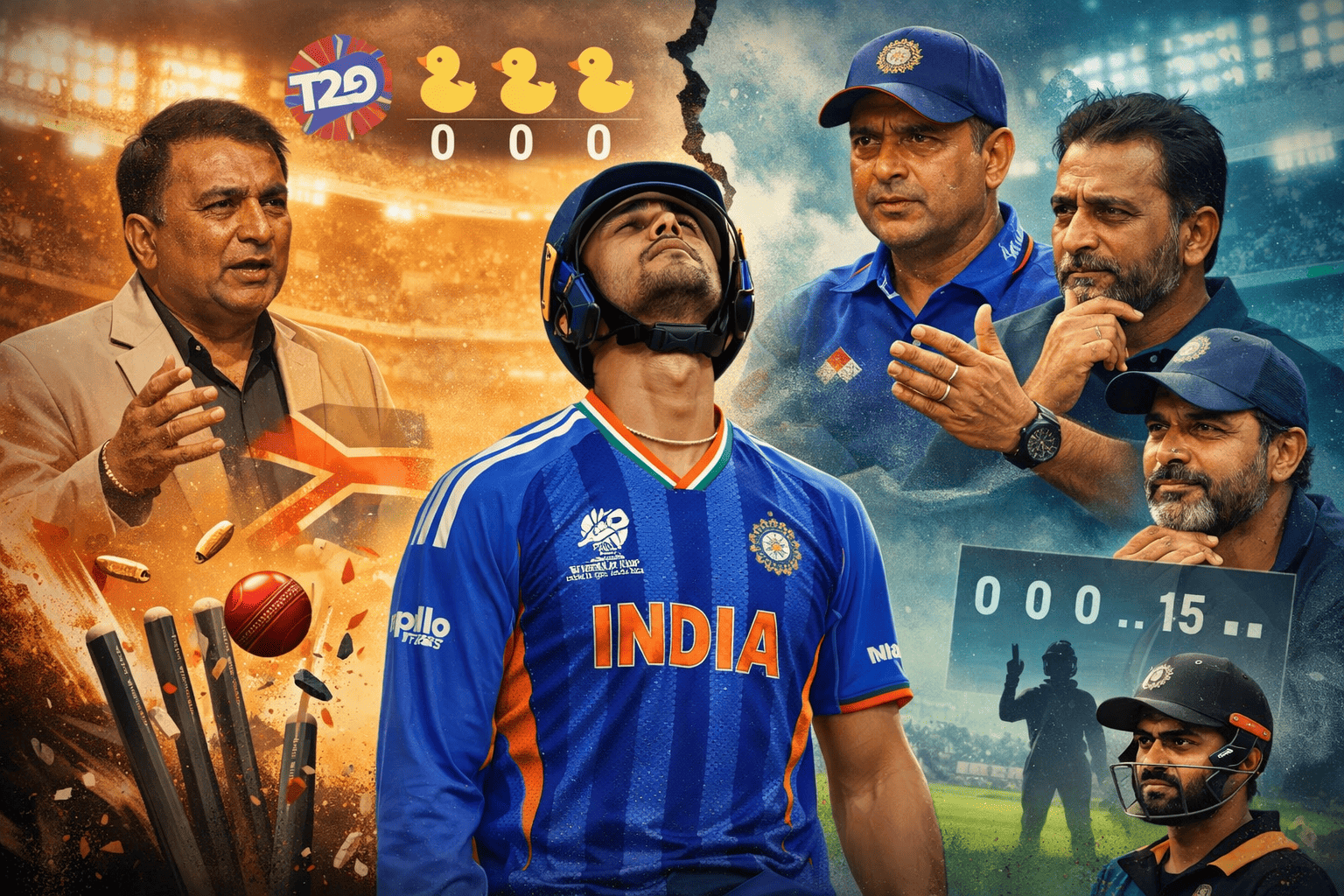
When a batter of Abhishek Sharma’s calibre endures a string of low scores, the noise grows louder with every innings. And in a tournament as intense as the T20 World Cup, even three ducks can begin to define the narrative.
Former India captain Sunil Gavaskar offered simple, old-school advice to the struggling opener: get off the mark.
“He shouldn’t force big shots across the line. Take a single and move on. Even four dot balls don’t matter,” Gavaskar suggested — a reminder that sometimes survival precedes domination.
Against South Africa, Abhishek finally broke his sequence of zeros with a boundary. It was a small release, a flicker of hope. He added two more fours and scraped to 15 — but the innings never truly took flight. India faltered, and so did the promise of a comeback knock.
A Pattern Emerging
Earlier in the tournament, off-spinners exposed technical vulnerabilities. This time, South Africa’s pacers adapted cleverly — bowling wide, slower deliveries that denied him the pace he thrives on. It was less about one weakness and more about oppositions beginning to decode his approach.
For a naturally aggressive batter, that can be the most challenging phase: when bowlers stop reacting and start planning.
Split in the Camp
Inside the Indian dressing room, there appears to be a philosophical divide.
Assistant coach Ryan ten Doeschate pointed to disrupted preparation as a key factor. A bout of food poisoning before the tournament, he explained, had stalled Abhishek’s rhythm.
“When you score three zeros, it weighs on you,” he admitted. “Our job as coaching staff is to pull that right. We’ve got four days to do that.”
In contrast, batting coach Sitanshu Kotak believes restraint is the better remedy.
“This isn’t the time to overload him with advice,” Kotak said. “If you tell a batter too many things in two days, you add doubts. Every player goes through a 2–3 match lean phase.”
Kotak’s philosophy is rooted in patience — subtle conversations with one or two trusted voices, not technical overhauls. In his view, confidence cannot be coached in a hurry; it must be rediscovered internally.
The Bigger Picture: Is ‘Form’ Even Real in T20?
Respected coach Zubin Bharucha offered a broader perspective on the situation. In a format like T20, he argues, the concept of “form” itself is fragile.
“The format has high variability. A player can go from zero to a hundred any day,” Bharucha noted, referencing the career arc of Sanju Samson, whose opening record often oscillates dramatically.
In such a volatile format, failure and brilliance coexist. The real challenge, Bharucha suggests, is emotional stability — walking out with the same fearless intent, regardless of the previous scorecard.
For Abhishek, that might mean not chasing confidence in the nets but rediscovering the audacity that brought him success in the first place.
Pressure Mounting
India’s campaign has lacked authority, and Abhishek’s dip has mirrored the team’s uncertainty at the top. His aggressive starts were meant to define the tournament’s tone. Instead, they’ve turned into early setbacks.
And with alternatives waiting in the wings — including the explosive Samson — the scrutiny will only intensify.
Failure Before Flight
Perhaps the most fitting words come not from cricket, but from basketball legend Michael Jordan:
“I’ve failed over and over and over again in my life. And that is why I succeed.”
Abhishek has failed in all four innings so far. In T20 cricket, that statistic can flip in a matter of minutes. One clean swing. One flowing powerplay. One day where timing replaces tension.
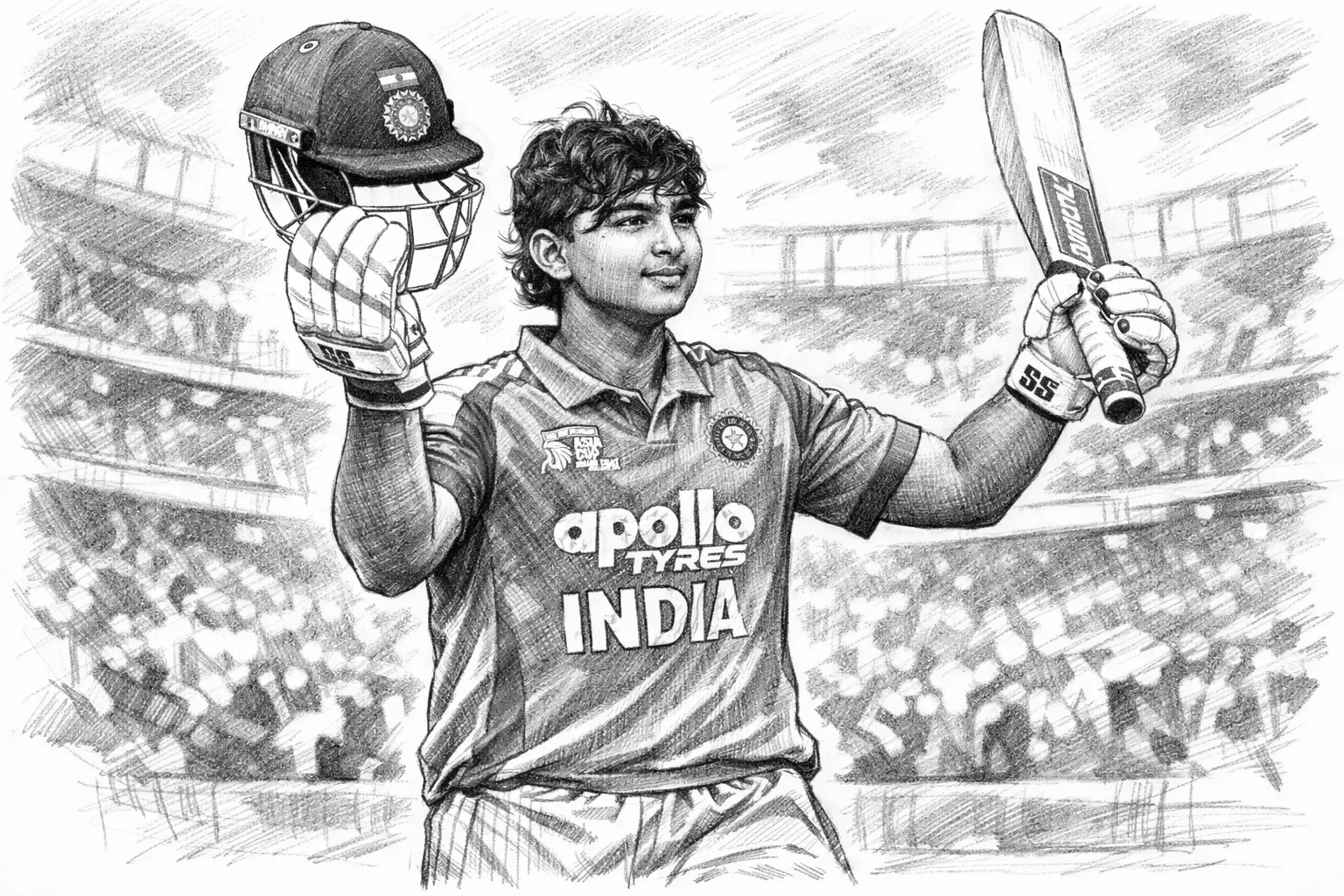
Maybe the slump is not a warning sign — but a prelude.
And maybe, just maybe, the breakthrough knock is waiting around the corner.