10 Defining Moments That Changed Cricket Forever (2008–2025)
More Than Just a League
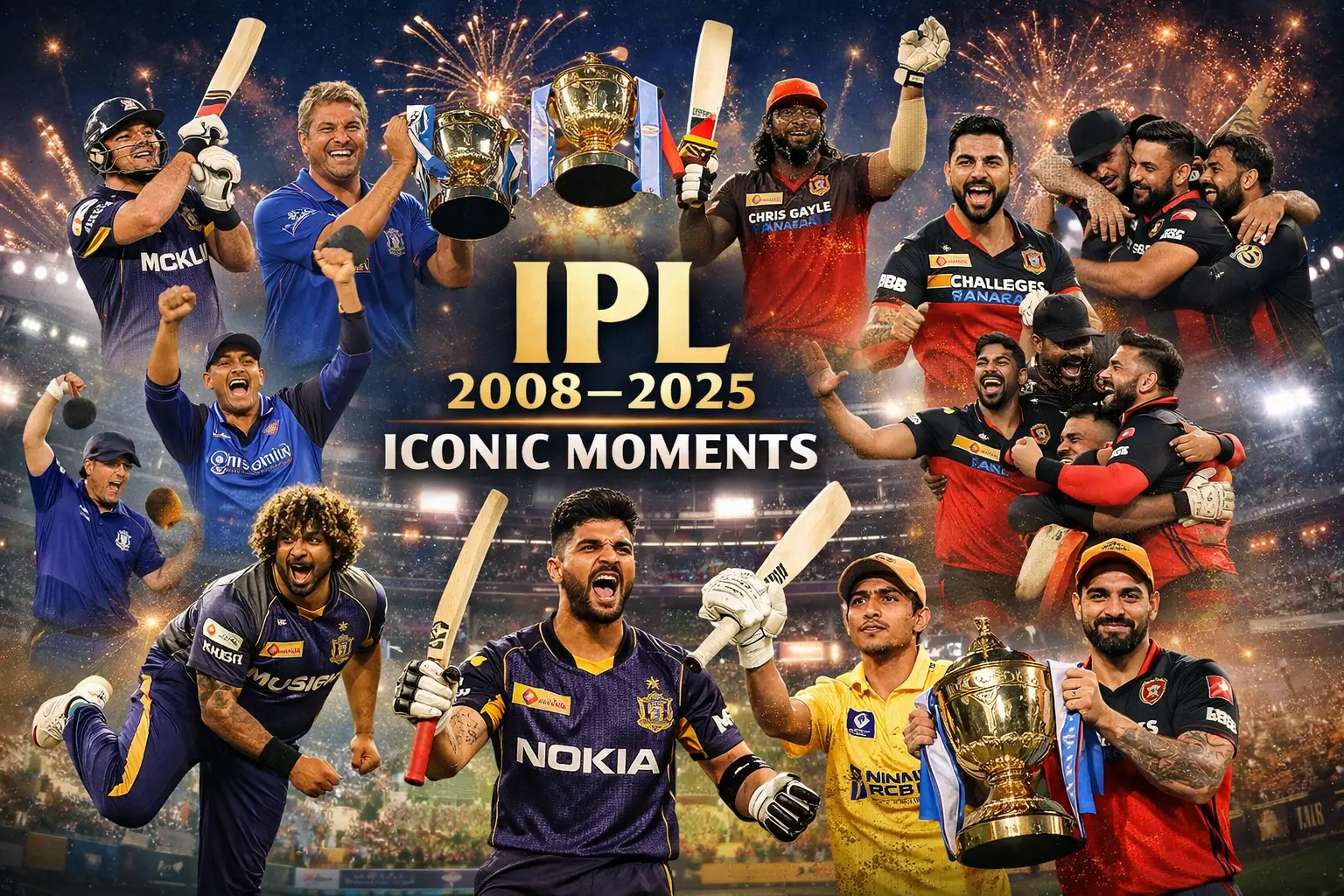
The Indian Premier League is not merely a cricket tournament—it is a phenomenon that has fundamentally altered the structure, economics, and culture of the sport. Since its inception in 2008, the IPL has grown into the most influential T20 league in the world, redefining how cricket is played, consumed, and commercialized. What sets the IPL apart is not just its scale, but its ability to produce defining moments that reshape the game.
These moments are not random highlights. They represent shifts in strategy, mindset, and execution—instances where pressure, innovation, and talent collide to create something transformative. From explosive batting performances to tactical masterclasses and emotional triumphs, the IPL has built its legacy on such turning points.
1. The Night That Started It All – McCullum’s 158* (2008)
The IPL’s journey began with uncertainty. Many questioned whether a franchise-based T20 league could sustain long-term interest. That doubt was shattered on the very first night when Brendon McCullum delivered one of the most iconic innings in cricket history.
Scoring an unbeaten 158 off 73 balls, McCullum didn’t just dominate the opposition—he redefined expectations. His aggressive stroke play, fearless intent, and ability to clear boundaries with ease sent a clear message: T20 cricket was not a shortened version of the game; it was an entirely new spectacle.
This innings served as a proof of concept for the IPL. It validated the entertainment value of the format, secured massive viewership, and laid the foundation for what would become cricket’s biggest commercial success story.
2. Rajasthan Royals and the Birth of the Underdog Narrative (2008)
While McCullum provided the fireworks, Rajasthan Royals delivered the narrative that gave IPL its competitive soul. With a squad lacking star power, they entered the tournament as underdogs. Yet, under Shane Warne’s leadership, they played a brand of cricket that emphasized strategy, discipline, and belief.
Their title-winning campaign showed that success in the IPL was not solely dependent on financial strength or marquee players. Instead, it highlighted the importance of team cohesion and tactical intelligence. This moment ensured that the league would remain unpredictable and competitive, a trait that continues to define it today.
3. Chris Gayle’s 175* – Power Hitting Redefined (2013)
By 2013, T20 cricket had evolved significantly, but Chris Gayle’s 175* pushed the boundaries even further. It was not just an innings—it was a statement about the future of batting.
Gayle’s dominance forced bowlers to rethink their strategies entirely. Traditional line-and-length bowling became ineffective against such power, leading to the development of variations like slower balls, wide yorkers, and knuckleballs. The innings also highlighted how conditions, such as smaller boundaries and batting-friendly pitches, could amplify performance.
This moment marked the peak of power-hitting evolution and set new benchmarks for what was considered achievable in T20 cricket.
4. The Mathematics of Madness – Tare’s Six (2014)
The IPL has always been about drama, but in 2014, it introduced a new dimension—mathematical tension. Mumbai Indians needed to chase a target within a specific number of overs to qualify based on net run rate, creating a scenario where every ball carried enormous significance.
Aditya Tare’s final-ball six was not just a match-winning shot; it was a moment that showcased how data and strategy had become integral to modern cricket. It highlighted the growing importance of analytics in decision-making, influencing how teams approach matches even today.
5. Virat Kohli’s Golden Season (2016)
Consistency in T20 cricket is rare, but Virat Kohli’s 2016 season was an exception that redefined batting excellence. Scoring 973 runs in a single season, Kohli demonstrated that technical precision and controlled aggression could dominate even the shortest format.
His performances challenged the perception that T20 cricket was solely about power hitting. Instead, he proved that timing, fitness, and mental strength could be equally effective. This season elevated the role of the “anchor” batter and influenced how teams structure their batting lineups.
6. The One-Run Final – Tactical Perfection (2019)
The 2019 IPL final between Mumbai Indians and Chennai Super Kings was a masterclass in pressure management. Defending a modest total, Mumbai relied on precise execution and calm decision-making.
The final over, bowled by Lasith Malinga, epitomized experience under pressure. His ability to deliver a perfect yorker on the last ball highlighted the importance of skill and composure in high-stakes moments. This match reinforced the idea that T20 cricket is not just about scoring runs—it is equally about defending them.
7. Rinku Singh’s Five Sixes – The Rise of the Finisher (2023)
In 2023, the IPL produced one of its most unbelievable moments when Rinku Singh hit five consecutive sixes to win a match. This was not just a display of skill; it was a demonstration of mental resilience and belief.
Rinku’s performance highlighted the evolving role of finishers in T20 cricket. Teams began to prioritize players who could handle pressure and deliver in the final overs, leading to a shift in recruitment strategies across franchises.
8. The Scoring Explosion – SRH’s 287/3 (2024)
The 2024 season saw batting reach unprecedented heights when Sunrisers Hyderabad scored 287/3, setting a new record. This match symbolized a shift toward ultra-aggressive batting, where traditional defensive strategies became increasingly ineffective.
The impact of this moment extended beyond a single match. It sparked debates about pitch conditions, rule changes, and the balance between bat and ball. It also forced teams to innovate further, particularly in bowling and field placements.
9. The Prodigy Era – Suryavanshi’s Historic Century (2025)
The emergence of Vaibhav Suryavanshi as a teenage sensation marked the beginning of a new era in cricket. His century at just 14 years old challenged traditional pathways to professional cricket.
This moment highlighted the IPL’s role as a platform for young talent. It demonstrated how scouting, data analysis, and early exposure could accelerate player development, potentially reshaping the future of the sport.
10. RCB’s Emotional Triumph (2025)
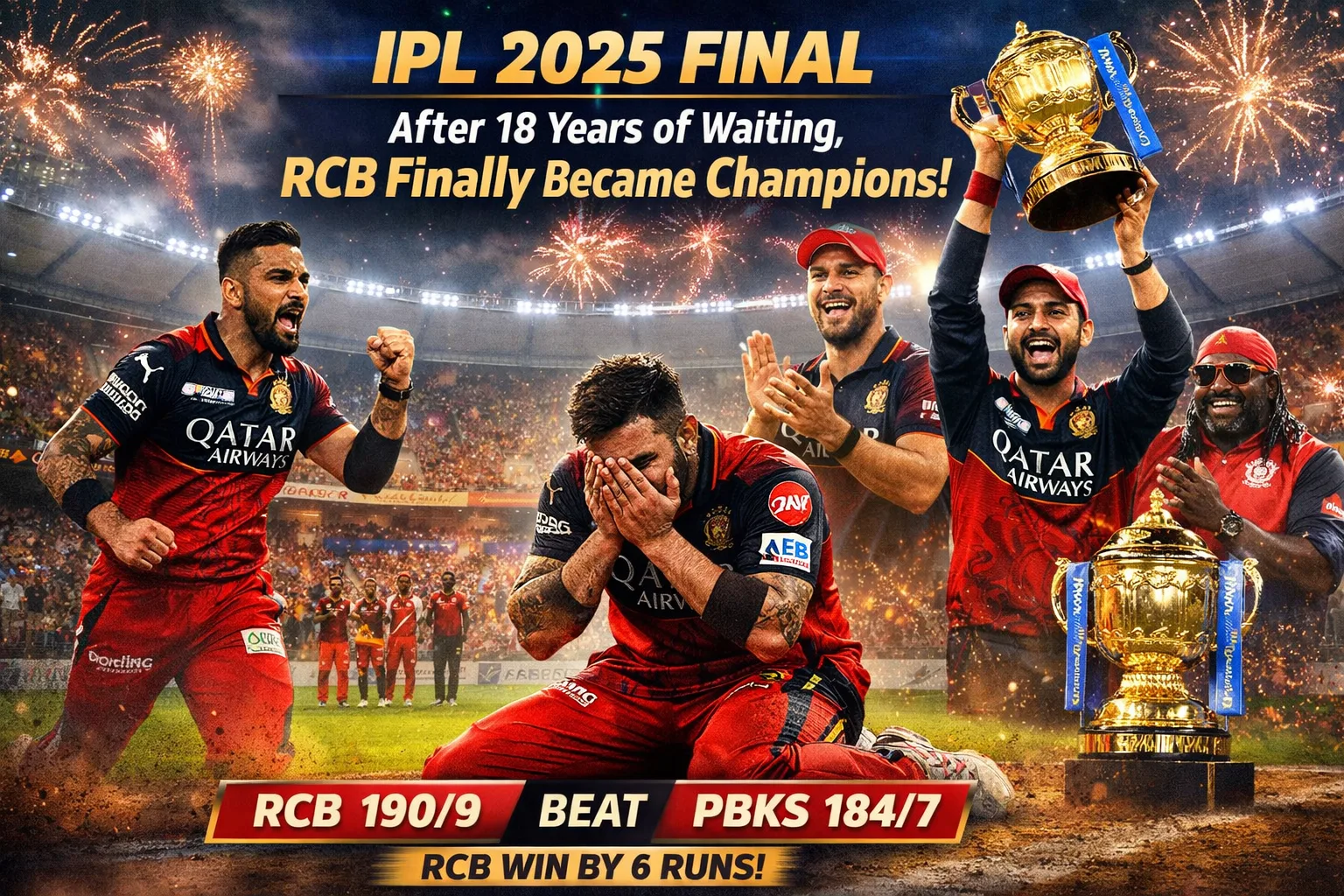
Few moments in IPL history have been as emotionally significant as Royal Challengers Bengaluru finally winning their first title. After years of near misses and heartbreaks, the victory represented perseverance and redemption.
Virat Kohli’s emotional reaction captured the essence of the IPL—where success is not just measured in trophies but also in the journey. This moment resonated deeply with fans, reinforcing the emotional connection that defines the league.
The Technical Evolution of Cricket
Beyond individual moments, the IPL has driven continuous innovation in cricket. Fielding standards have improved dramatically, with athleticism becoming a key component of team success. Bowling strategies have evolved to counter increasingly aggressive batting, leading to the development of new techniques and variations.
The introduction of rules like the Impact Player has further added complexity, allowing teams to adapt dynamically during matches. These changes have made the IPL a testing ground for innovation, influencing cricket at all levels.
The Cultural and Economic Impact
The IPL’s influence extends beyond the field. It has transformed cricket into a global entertainment product, attracting players, sponsors, and audiences from around the world. The league has also played a significant role in popularizing T20 cricket, making it accessible to a broader audience.
At the same time, controversies and challenges have shaped its evolution. From disciplinary issues to governance reforms, the IPL has navigated its share of obstacles, emerging stronger and more professional.
Looking Ahead: The Future of IPL
As the IPL moves into the future, it faces new challenges and opportunities. The rise of young talent, advancements in technology, and changing audience preferences will continue to shape its trajectory.
What remains constant is its ability to produce unforgettable moments. Whether it is a last-ball thriller, a record-breaking performance, or an emotional victory, the IPL continues to redefine what is possible in cricket.
Conclusion: A League Built on Moments
The story of the IPL is not just about matches or statistics—it is about moments that capture imagination and redefine boundaries. Each of the events discussed here represents a turning point, contributing to the league’s evolution.
From McCullum’s explosive start to RCB’s emotional triumph, these moments form the foundation of the IPL’s legacy. As the league continues to grow, it will undoubtedly create new stories, ensuring that its journey remains as dynamic and compelling as ever.
Related Topic
About the Author

Sudhanshu Shekhar Sudhanshu Shekhar is a cricket analyst and sports writer specializing in IPL, international cricket, and tournament analysis. As the Sports Editor of ApexAdPros, he provides in-depth match breakdowns, player insights, and cricket statistics for fans around the world. His coverage focuses on match strategies, key moments, and emerging cricket talent across global tournaments.
View all posts →