Sunrisers Leeds Abrar Ahmed Controversy: Cricket, Politics, and the Battle of Sentiment
Introduction: When Cricket Meets Controversy
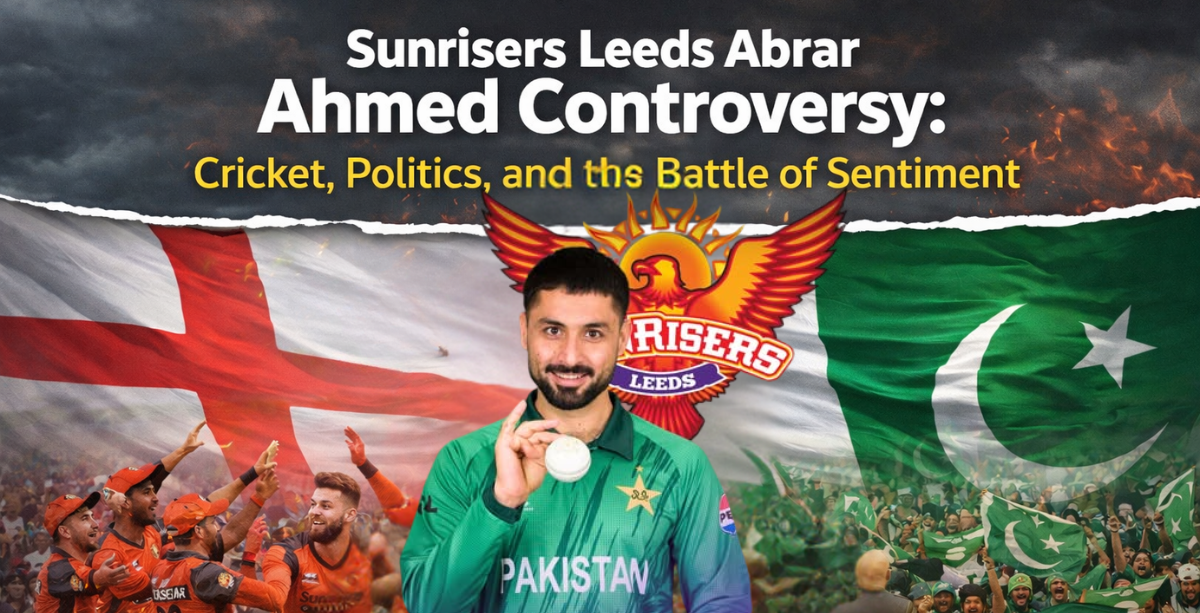
In the modern era of franchise cricket, the game has become more than just runs and wickets. It is a global business, a cultural force, and sometimes, a political flashpoint. The recent signing of Pakistani spinner Abrar Ahmed by Sunrisers Leeds in The Hundred 2026 has sparked exactly such a moment.
What should have been a routine auction decision quickly turned into a massive controversy. Indian social media exploded with reactions, debates, and boycott calls. The hashtag #BoycottSunrisers began trending, and the conversation shifted from cricketing strategy to national sentiment.
This raises an important question:
Is this a progressive step toward global sports unity, or a move that ignores the emotions of millions of Indian fans?
1. The Auction That Shook the Internet
The controversy began in London during The Hundred 2026 auction. The tournament, organized by the England and Wales Cricket Board (ECB), has evolved significantly in recent years. After selling stakes to private investors, many franchises are now controlled by owners who also run IPL teams.
This connection brought an unspoken expectation. Since Pakistani players have not been part of the IPL since 2008, there has been a silent understanding that Indian-owned teams would avoid signing them, even in foreign leagues.
However, that expectation was broken.
Kavya Maran, CEO of the Sunrisers franchise, made a bold move. Sitting alongside head coach Daniel Vettori, she bid aggressively and secured Abrar Ahmed for £190,000, which is approximately ₹2.34 crore.
The reaction was immediate and intense.
Within minutes:
-
Social media platforms saw a surge of criticism from Indian fans
-
The official Sunrisers Leeds X (formerly Twitter) account was reportedly suspended
-
Online debates escalated into full-scale outrage
For many fans, this was not just a cricketing decision. It felt like crossing an emotional boundary.
2. The Sold and the Unsold: A Clear Pattern
The auction had already created tension even before Abrar Ahmed was picked. A total of 14 Pakistani players were shortlisted for The Hundred 2026 draft.
However, most IPL-linked franchises chose to stay away from them.
Key Outcomes from the Auction
Abrar Ahmed (Sunrisers Leeds)
The biggest headline of the auction. His signing broke the long-standing pattern and became the center of controversy.
Usman Tariq (Birmingham Phoenix)
The only other Pakistani player who found a team. He was signed for £140,000, but his selection did not create similar outrage, mainly because the franchise is not IPL-linked.
High-Profile Snubs
Several top Pakistani cricketers went unsold, including:
-
Shadab Khan
-
Haris Rauf
-
Saim Ayub
Their absence from team lists reflected the cautious approach of most franchises.
Shaheen Shah Afridi’s Withdrawal
Perhaps the most telling moment came even before the auction. Pakistan’s ODI captain Shaheen Shah Afridi withdrew from the draft just 24 hours earlier.
This decision was widely seen as a strategic move, indicating awareness of the sensitive environment and possible backlash.
3. Why the Outrage? Understanding the Emotional Context
To understand the scale of the backlash, one must go beyond cricket.
In India, cricket is deeply connected with national identity. Matches involving Pakistan are not just sporting events; they carry emotional and historical weight.
The Legacy of Conflict
Since 2008, Pakistani players have been absent from the IPL. This is not just a sporting decision but is closely tied to political tensions and concerns over cross-border terrorism.
For many Indian fans, this absence has become a symbol of national stance.
Operation Sindhoor and Recent Events
The memory of Operation Sindhoor in May 2025 is still fresh. This operation was India’s response to the Pahalgam terror attacks, targeting terror infrastructure across the border.
Such events strengthen public sentiment and influence how decisions like player signings are perceived.
When an Indian-owned franchise signs a Pakistani player, many fans see it as ignoring these realities.
Emotional Reaction vs Business Decision
From a business perspective, Sunrisers Leeds made a cricketing choice. Abrar Ahmed is a talented mystery spinner who can bring value to the team.
However, from an emotional perspective, fans see:
-
A disconnect from national sentiment
-
A prioritization of profit over patriotism
-
A lack of sensitivity toward recent events
This gap between business logic and public emotion is what fueled the outrage.
4. The Mustafizur Precedent and Bangladesh Crisis
This is not the first time a franchise has faced such backlash.
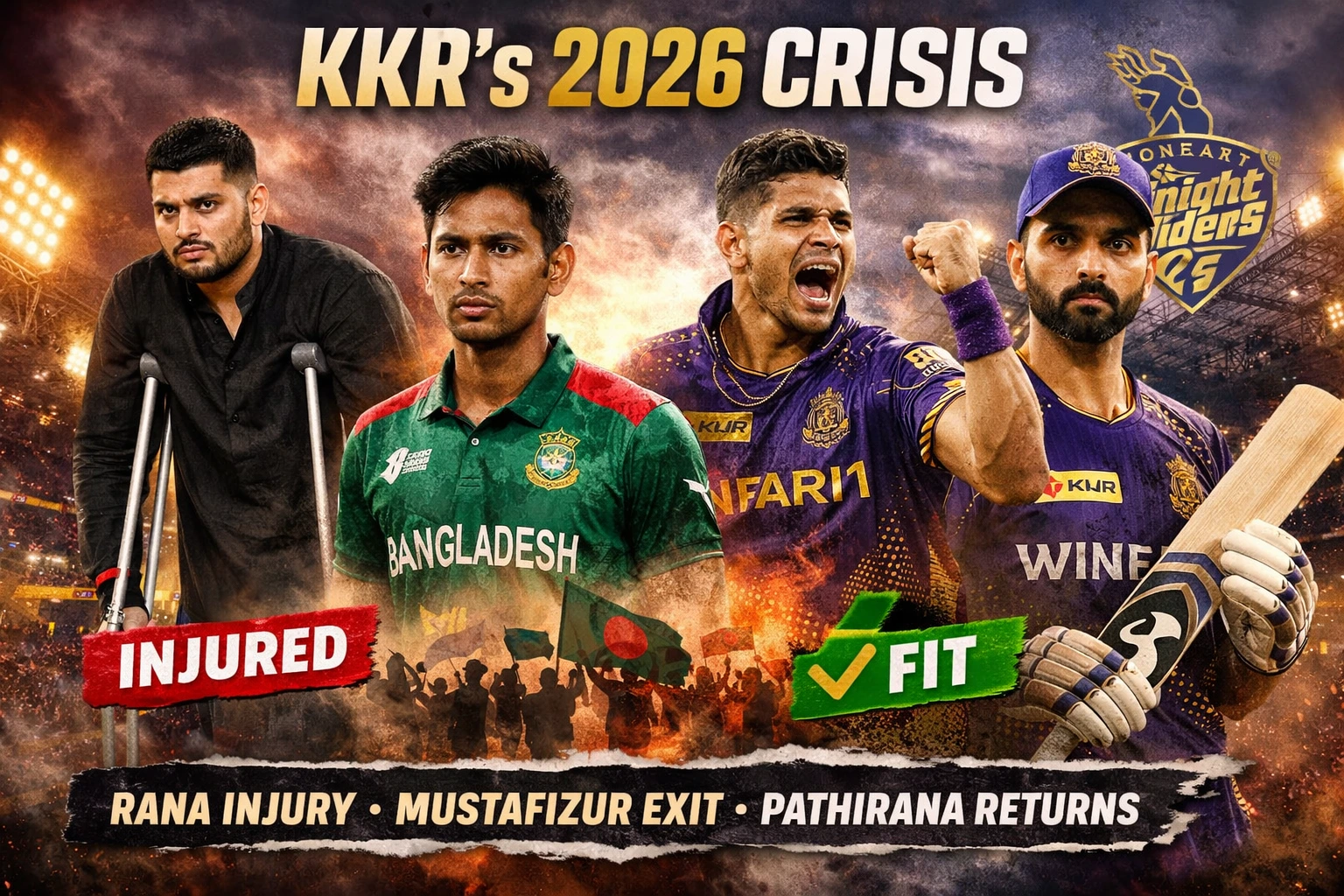
Earlier in IPL 2026, Kolkata Knight Riders signed Bangladesh’s Mustafizur Rahman for ₹9.20 crore. The move triggered strong reactions from fans.
Why Was There Backlash?
The controversy was linked to:
-
Reports of violence against Hindu minorities in Bangladesh
-
Anti-India statements from political leaders
-
Rising diplomatic tensions
Fans questioned whether Indian franchises should engage with players from countries where anti-India sentiment appeared strong.
The Outcome
The pressure grew so intense that:
-
The BCCI reportedly intervened
-
Mustafizur Rahman was released from the squad
Additionally, Bangladesh was later excluded from the ICC T20 World Cup 2026 after refusing to travel to India, citing security concerns that were deemed unverifiable.
A Pattern Emerges
These incidents show a clear pattern:
-
Cricket decisions are increasingly influenced by geopolitical context
-
Fan sentiment can directly impact team actions
-
Franchises are no longer insulated from public opinion
The Sunrisers Leeds controversy fits into this larger trend.
5. Fueling the Fire: The Role of Player Statements
Another important factor in this controversy is the role of player statements.
During periods of political tension, several Pakistani cricketers—both current and former—have made statements that were perceived as critical or hostile toward India.
Why This Matters
Fans argue that:
-
Players are not just athletes; they are public figures
-
Their statements influence public perception
-
Negative remarks create emotional distance
When such players later participate in leagues linked to Indian franchises, it creates a contradiction in the eyes of fans.
Expectation from Global Athletes
Indian fans often believe that:
-
Players who benefit from Indian platforms should avoid making inflammatory statements
-
Neutrality should be maintained in sensitive situations
-
Respect for fan sentiment is important
The absence of this balance adds fuel to the controversy.
6. The “Money Over Morals” Debate
At the heart of this issue lies a larger debate:
Should cricket be purely business, or should it reflect national values?
The Gurbaz Example
Afghanistan’s Rahmanullah Gurbaz recently withdrew from PSL 2026. While the official reason was personal, many saw it as a decision to avoid political controversy.
This move was appreciated by fans, who viewed it as a sign of awareness and responsibility.
The Criticism of Pakistani Players
Critics argue that:
-
Some players take strong political positions during conflicts
-
Later, they participate in leagues involving Indian stakeholders
-
This creates a perception of inconsistency
The argument is simple:
If a player strongly opposes a country politically, participating in its business ecosystem raises ethical questions.
Sunrisers’ Position
By signing Abrar Ahmed, Sunrisers Leeds:
-
Took a bold and independent decision
-
Challenged the existing unwritten rules
-
Triggered a debate that goes beyond cricket
For some, this is a progressive step.
For others, it is a betrayal.
Conclusion: A Thin Line Between Sport and Sentiment
The Sunrisers Leeds–Abrar Ahmed controversy is not just about one player or one auction.
It represents a larger shift in modern cricket:
-
Where business decisions collide with public emotion
-
Where global leagues intersect with national identity
-
Where fans demand accountability beyond the boundary line
Cricket has always been called a gentleman’s game. But in today’s world, it is also a reflection of society, politics, and sentiment.
As franchise cricket continues to grow, such controversies may become more common. The challenge for teams will be to balance global ambitions with local emotions.
Because in India, cricket is never just a game.
Statements by Pakistani Players
1. Shahid Afridi: The "False Flag" Accusation
Former captain Shahid Afridi was among the most vocal, sparking outrage by suggesting the original terror attack was an internal Indian matter.
Statement: "India kills its own people and then shifts the blame onto Pakistan to justify its aggression. How did 8 lakh soldiers fail to prevent an attack unless it was allowed to happen?"
Note: He further mocked the Indian Army’s response time, claiming they arrived "an hour late" to the site.
2. Abrar Ahmed: The "Tea" Mockery
The current Sunrisers Leeds signee, Abrar Ahmed, caused a massive stir in March 2025 by reviving a sensitive historical taunt during the height of the military tensions
Statement: "Fantastic Tea."
Context: He posted a photo of himself holding a cup of tea with this caption, a direct reference to the 2019 Abhinandan Varthaman incident. This was viewed by Indian fans as a deliberate attempt to mock the dignity of the Indian Air Force during a time of active conflict.>
3. Faheem Ashraf: The "Sindoor" Disrespect
Faheem Ashraf faced severe backlash for a highly provocative Instagram post that many viewed as an attack on Indian cultural and national dignity.
Statement: "New Chapter Begins."
Context: The caption accompanied a Ghibli-style artwork showing a Pakistani soldier applying 'sindoor' to a woman dressed in an Indian tricolor sari. Indian fans interpreted this as a graphic metaphor for the "conquest" of India, released just as the country was mourning the victims of the Pahalgam attack.
4. Javeria Khan: The "Civilian" Narrative
Former women's team player Javeria Khan attempted to frame the surgical strikes on terror camps as an attack on the innocent, which was labeled as "unfounded propaganda" by analysts.
Statement: "It is not bravery to attack civilians in the dark of night, take innocent lives, including little children. There is no pride in shedding blood. There is no honour in killing innocent people."
Context: This was seen as a direct attempt to shield terror infrastructure by mislabeling the targets of Operation Sindoor as civilian areas.
5. Iftikhar Ahmed: The Defiant Defense
Iftikhar Ahmed made statements defending the military narrative of Pakistan while openly challenging India's right to retaliate.
Statement: "Pakistan knows how to respond to hollow threats. We stand with our forces against any outside aggression, and India's claims are nothing but a cover for their own failures."
About the Author

Sudhanshu Shekhar
Sudhanshu Shekhar is a cricket analyst and sports writer specializing in IPL, international cricket, and tournament analysis. As the Sports Editor of ApexAdPros, he provides in-depth match breakdowns, player insights, and cricket statistics for fans around the world. His coverage focuses on match strategies, key moments, and emerging cricket talent across global tournaments.