
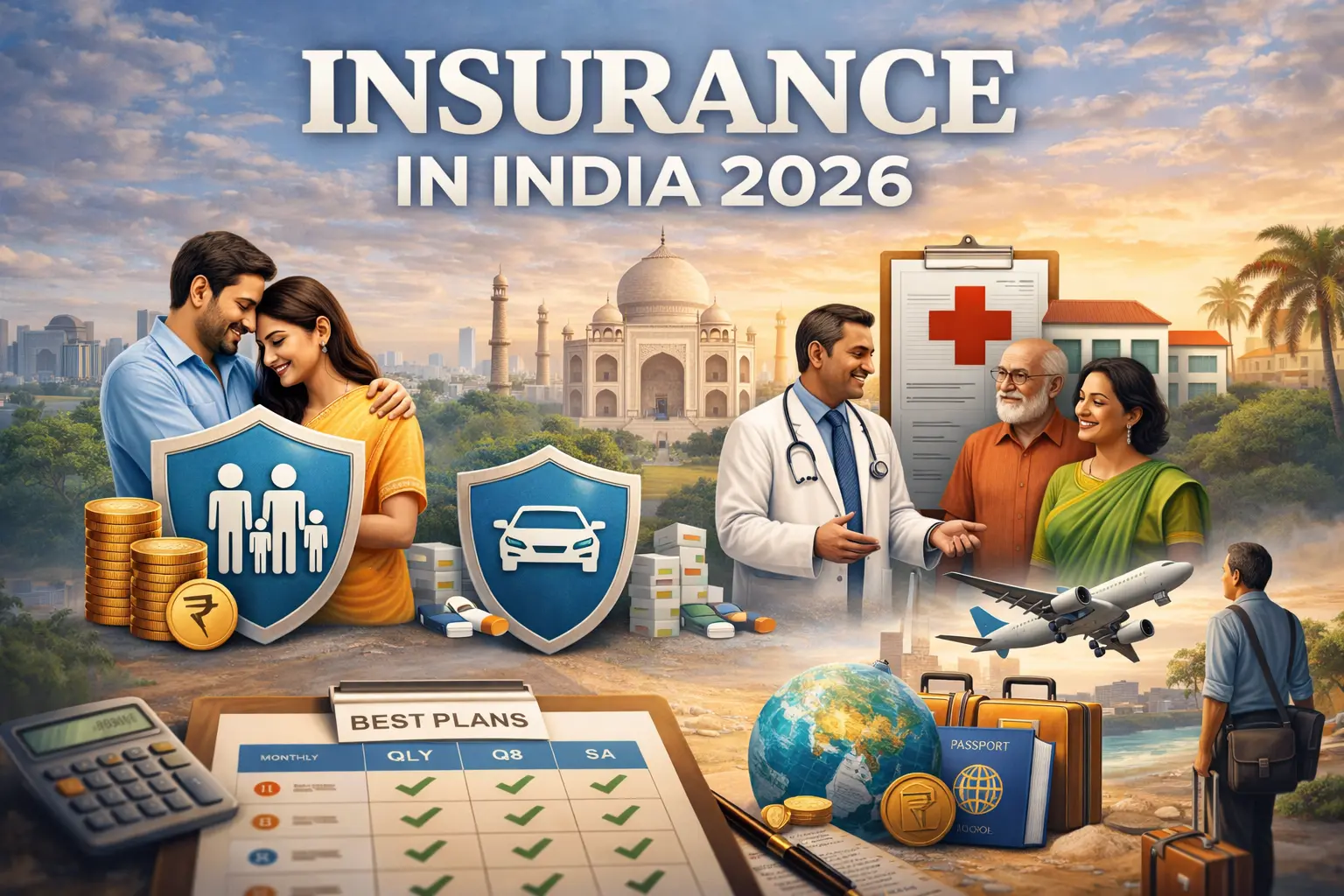
Insurance in India 2026: The Complete Guide to Choosing the Right Coverage (Life, Health, Motor & Travel)
The Reality Most Indians Ignore About Insurance
One medical emergency.
One accident.
One unexpected loss in the family.
That’s all it takes to wipe out years of savings.
In cities like Delhi NCR, a single hospitalization can cost anywhere between ₹3–8 lakh. ICU stays can go up to ₹50,000 per day or more.
Yet most people:
- Delay buying insurance
- Choose the cheapest plan
- Or depend entirely on agents
The real problem is not buying insurance.
The real problem is buying the wrong insurance.
Because insurance does not fail when you purchase it.
It fails when you try to use it.
What Insurance Actually Means
Insurance is not an investment. It is financial protection.
You pay a small, predictable premium today to protect yourself from a large, unpredictable financial loss in the future.
For example:
- Annual premium: ₹12,000–₹20,000
- Potential protection: ₹5–₹20 lakh
This makes insurance one of the most efficient financial tools available.
As highlighted in your earlier draft, this basic concept is often misunderstood by buyers
The 4 Types of Insurance You Actually Need
1. Life Insurance (Term Plan)
If your family depends on your income, this is essential.
Purpose:
- Replaces income in case of death
- Covers loans, education, and daily expenses
Practical Example:
A person earning ₹60,000 per month passes away unexpectedly.
A ₹1 crore term plan ensures that the family continues to live with financial stability.
Expert Insight:
Avoid mixing insurance with investment.
Term insurance is the most efficient and cost-effective option for pure protection.
2. Health Insurance
Healthcare costs in India are rising rapidly.
- Dengue: ₹1–2 lakh
- Surgery: ₹5–10 lakh
- Cancer treatment: ₹10–25 lakh
Purpose:
- Covers hospitalization expenses
- Prevents savings from being wiped out
Important Reality:
Employer-provided insurance is not enough.
It ends when you leave your job.
3. Motor Insurance
Most people treat it as a legal requirement.
That approach is risky.
Types:
- Third-party insurance: Covers damage to others only
- Comprehensive insurance: Covers your vehicle as well
If your car is damaged and you only have third-party insurance, you bear the full cost.
4. Travel Insurance
Often ignored, but critical for international travel.
Why it matters:
Medical emergencies abroad can cost several lakhs.
Coverage includes:
- Hospitalization
- Trip cancellations
- Lost baggage
What Most People Get Wrong About Insurance
Buying Insurance Only for Tax Saving
Insurance should not be purchased just to save tax.
It should be purchased to protect financial stability.
Choosing the Cheapest Policy
Low-cost plans often include:
- Room rent limits
- Sub-limits on treatments
- Co-payment clauses
These restrictions reduce claim value significantly.
Not Reading Policy Documents
Most people skip policy details.
This leads to claim rejection or partial payouts.
Delaying Purchase
Buying insurance late results in:
- Higher premiums
- More exclusions
- Longer waiting periods
Health Insurance Deep Dive
Recommended Coverage (2026)
| User Type | Ideal Coverage |
|---|---|
| Individual | ₹10–15 lakh |
| Family (Metro) | ₹20–25 lakh |
| High income | ₹50 lakh+ |
Key Features to Check
No Room Rent Limit
Prevents hidden costs during hospitalization.
No Disease Sub-Limits
Ensures full claim coverage.
Restoration Benefit
Replenishes coverage after use.
Large Hospital Network
Ensures easy access to cashless treatment.
Simple Claim Process
Reduces delays and stress.
Top Health Insurance Plans in India (2026)
HDFC ERGO Optima Secure
Best overall plan with strong coverage and reliability.
Niva Bupa ReAssure 2.0
Ideal for multiple hospitalizations due to unlimited restoration.
ICICI Lombard Elevate
Flexible plan with multiple add-on options.
Care Supreme
Affordable option with decent coverage.
Tata AIG Medicare Premier
High-end plan with large coverage limits.
Comparison Table
| Plan | Best For | Key Strength |
|---|---|---|
| HDFC ERGO | Families | High coverage |
| Niva Bupa | Frequent usage | Unlimited restore |
| ICICI Lombard | Professionals | Flexibility |
| Care Supreme | Budget buyers | Low premium |
| Tata AIG | High income | Large coverage |
Claim Reality: What Actually Happens
Claim rejection is rarely due to the insurer alone.
Common reasons include:
- Incorrect room category
- Waiting period not completed
- Incorrect information provided
Choosing the right policy is more important than choosing the brand.
Motor Insurance Strategy
What You Should Include
- Comprehensive coverage
- Zero depreciation add-on
- Engine protection (especially in flood-prone areas)
Practical Tip
Avoid unnecessary add-ons. Focus on features that directly impact claim value.
Travel Insurance Strategy
Key Checks
- Minimum $500,000 medical coverage
- Cashless hospital network
- Emergency evacuation
Traveling without insurance is a financial risk.
Local Insight: Delhi NCR and Ghaziabad
In NCR:
- Healthcare costs are higher than most cities
- Network hospitals matter more than total count
- Cashless availability is critical during emergencies
Choosing a policy without local network coverage reduces its usefulness significantly.
How to Choose the Right Insurance Plan
Step 1: Assess Your Needs
Consider:
- Income
- Dependents
- Location
Step 2: Compare Plans
Focus on:
- Claim settlement ratio
- Features
- Network coverage
Step 3: Read Policy Details
Check:
- Exclusions
- Waiting periods
- Limits
Step 4: Buy Early
Early purchase ensures better coverage and lower cost.
Ideal Insurance Setup
A strong insurance strategy includes:
- Term insurance for income protection
- Health insurance for medical coverage
- Motor insurance for asset protection
- Travel insurance for international safety
Why Insurance Is Not an Expense
Example:
- Premium: ₹15,000/year
- Total over 10 years: ₹1.5 lakh
One hospitalization can cost ₹5–10 lakh.
Insurance protects against financial shocks that savings alone cannot handle.
At The End
A good insurance plan is not the cheapest one.
It is the one that works when you need it.
Insurance is not about returns.
It’s about survival without financial damage.
You don’t buy it because something will happen.
You buy it because something can happen.
And when it does —
You’ll be glad you planned ahead.
⚠️ Financial Disclaimer
The information provided in this article is for educational and informational purposes only and should not be considered as financial, investment, or professional advice. All investments carry risk, including the possible loss of principal. You should conduct your own research or consult with a qualified financial advisor before making any investment decisions.
About the Author

Deshraj Singh Deshraj Singh is a business entrepreneur and finance-focused content strategist, known for simplifying complex financial concepts into practical insights for everyday decision-making. With hands-on experience in building and scaling digital ventures, he brings a real-world perspective to topics like investing, money management, and wealth creation. His work focuses on helping individuals understand finance in a way that is both actionable and aligned with real-life responsibilities.
View all posts →