
Before You Take a Personal Loan, Read This First
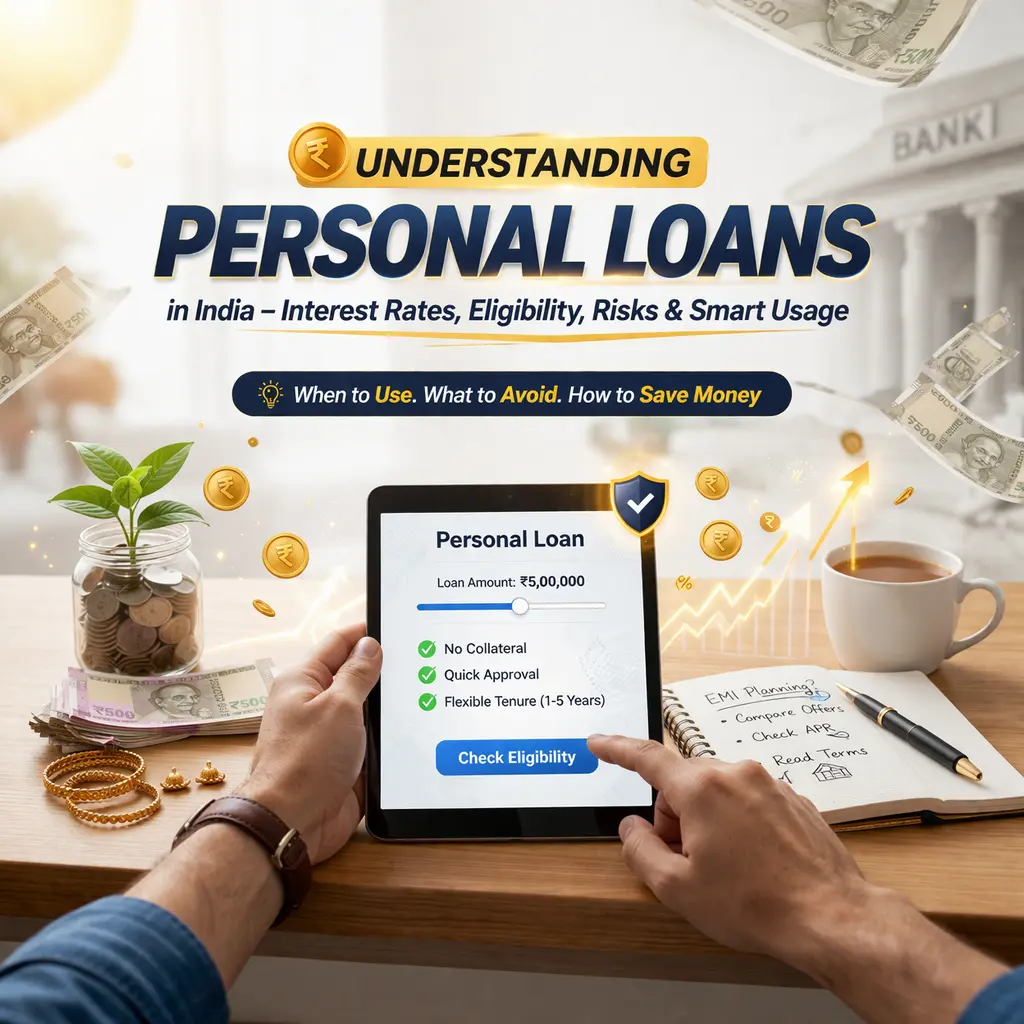
Now a days getting a personal loan is easy. Living with it is the real challenge. you must know about personal loan before borrowing it.
So let’s start simple.
Most people hear the term personal loan and think — “easy money, fast approval, no collateral, great option.”
But honestly… it’s not that simple.
What is Personal Loan?
A personal loan is actually one of the most interesting financial tools out there. It looks simple from the outside, but underneath, there’s a lot going on — risk, psychology, economics, even behavior patterns of people.
From what your content explains , India has shifted a lot in the last 10 years. Earlier, people mostly borrowed against something — gold, house, land. Now, people are borrowing without any asset. That’s a big change.
And that change has created both opportunity… and risk.
What exactly is a personal loan (but in real life terms)
Let’s not define it like a textbook.
A personal loan is basically:
“A loan where the bank trusts you, not your asset.”
That’s it.
No gold, no property, no vehicle. Just your:
- income
- job stability
- past repayment behavior
So if someone earns ₹50,000/month and has a clean repayment history, the bank says:
“Okay, we believe you will return the money.”
But here’s the catch — because there’s no backup (like property), the bank is taking a bigger risk.
And risk always has a price.
Why personal loans are more expensive (this part people ignore)
A lot of people complain:
“Why is personal loan interest so high?”
But think like a lender for a second.
If someone takes a home loan and stops paying — bank sells the house.
If someone takes a car loan — bank takes the car.
But in personal loan?
Nothing.
The bank has no guarantee.
So what do they do?
They increase interest rate to cover:
- possible defaults
- operational cost
- recovery cost
- profit margin
That’s why:
- Home loan →As it is secure by property bank can give you competitive rate around ~8–9%
- Personal loan → The interest rate is decided on multiple factor like job, company, old pyamet history etc. So typically ranges from around 10% to 24% depending on profile.
Some NBFCs go even higher (30%+ effective cost), Some banks offer ~9.5% for premium users. Make sure you calculate rate and compare rates before choosing one.
Not because lender's are greedy… but because risk is higher.
📚 Also Read
Secured vs Unsecured — the real difference (not boring theory)
Let me explain this in a way you’ll actually remember.
Imagine two people:
Person A
- Takes loan against gold
- If he doesn’t pay → gold is gone
Person B
- Takes personal loan
- If he doesn’t pay → nothing immediate is taken
Now ask yourself:
Who is more risky for the bank?
Obviously Person B.
So bank protects itself by:
- charging more interest
- checking credit score strictly
- limiting loan amount
This is exactly what your document explains in detail — just broken down in simpler human terms here.
How banks actually decide your interest rate
This is where things get interesting.
People think:
“Interest rate is fixed.”
Nope. It’s personalized.
1. Credit Score (your financial reputation)
If your score is:
- 750+ → best rates
- 650–750 → average rates
- below 650 → risky customer
It’s like your financial report card.
If you’ve paid EMIs on time before, banks trust you more.
2. Your job matters more than you think
This sounds unfair… but it’s real.
- Government job → very stable → lower interest
- Big company employee → decent trust
- Small company / freelancer → higher risk
Because banks think:
“Will this person still earn next year?”
3. Your existing debt (this one is dangerous)
Let’s say:
- You earn ₹40,000/month
- Already paying ₹20,000 in EMIs
Now you want another loan.
Bank thinks:
“This person is already stretched.”
So either:
- reject
- or give higher interest
This is called DTI ratio (debt-to-income), but honestly you just need to remember:
More existing EMI = less trust
Flat interest vs reducing interest (this confuses almost everyone)
This part is very important, and honestly most people get tricked here.
Flat interest (sounds cheap but isn’t)
Interest is calculated on full amount, all the time.
Even if you’ve already repaid half… bank still charges on full.
Reducing interest (actual fair system)
Interest is charged only on remaining amount.
So as you pay EMI, interest decreases.
Simple example:
Loan = ₹1,00,000
Flat system → you might pay around ~₹30,000 interest
Reducing system → ₹16k–₹18k depending on EMI structure.
Same rate… but double difference.
That’s why experts always say:
Don’t trust only the percentage. Understand the method.
Exact amount depends on EMI schedule must check the loan document to calculate.
When personal loans actually make sense
Now this is where most people go wrong. They use personal loans for the wrong reasons. And get trapped in this.
Let’s see where it actually makes sense and where not.
1. Debt consolidation (smart use)
Imagine:
- You have 3 credit cards
- And you are paying Interest ~36% yearly on your purchase.
Now you take:
- Personal loan around 10% to 14%
And close all credit cards. Pay them in full.
Result:
- Lower EMI
- Less stress
- huge interest saving
This is actually a smart move. This is called a proper financial planning.
This is an example. Make sure before taking any decision you must check your finances.
2. Medical emergency
No time to arrange funds.
Insurance not enough.
Personal loan helps immediately.
This is one of the most justified uses.
Because life is important then money.
3. Skill upgrade or education
If a course helps you earn more later, then loan is not expense… it’s investment.
Example:
Someone takes ₹1 lakh loan to learn high-paying skill and later earns ₹20k extra/month.
That’s worth it.
4. Business cash gap
Small business stuck temporarily.
Needs money to keep running.
Personal loan works faster than business loan.
These only examples we do not know your current financial situation. Make sure before taking any decision you must check your finances. Or talk to
Where personal loans become dangerous and must be ignored.
This is important… because most people fall here.
Unnecessary uses:
- buying expensive phone on loan
- vacations on EMI
- luxury items
- impulse shopping
Why?
Because:
You’re paying interest on something that loses value.
Example:
You buy phone for ₹80,000 on loan
After 1 year → value ₹40,000
But you paid ₹95,000 total
That’s wealth destruction.
Again these are on for example. You must take decision based on your current financial situation. Because a risk for person A can’t be for Person B. It all depends on the situation you are in.
Better Alternatives of Personal Loan(people ignore these)
Before taking personal loan, always check:
1. Gold loan
What Is Gold Loan?
A gold loan is basically when you take money from a bank or lender by keeping your gold as security.
Simple way to understand:
You give your gold → lender gives you money → you repay → you get your gold back
Benefits:
- cheaper interest
- fast approval
2. Loan against FD
What Is Loan against FD
A loan against FD (Fixed Deposit) is when you borrow money from a bank by using your own fixed deposit as security.
In simple words:
Your FD stays intact → bank gives you a loan → you repay → FD continues earning interest
You’re basically borrowing against your own savings instead of breaking them.
Benefits:
- almost your own money
- very low cost
3. Home loan top-up
Lets understand The Home Loan Top-Up (Defination)
A home loan top-up is an additional loan that you can take on top of your existing home loan, from the same lender, without starting everything from scratch.
Simple way to get it:
You already have a home loan → you’ve repaid some part → bank trusts you → bank gives you extra money on the same loan
Benefits:
- cheaper than personal loan
- longer tenure
4. Loan against property
What Is Loan against property
A Loan Against Property (LAP) is when you borrow money by mortgaging your property — meaning you temporarily give your property as security to the lender while still living in or using it.
Simple way to understand:
You don’t sell your property → you use its value to get a loan → you repay → property remains yours
Benefits:
- lower rates for big amounts
Personal loan should be last option… not first.
Banks vs NBFCs (which one is better)
This part depends on your profile.
Banks:
- lower interest
- strict rules
- slow process sometimes
Best for:
- salaried people
- good credit score
Try choosing bank in which the salary is credited. Take decision based on best offer only.
NBFCs:
- faster approval
- flexible rules
- slightly higher interest
Best for:
- freelancers
- lower credit score
- urgent need
There’s no “better” option.
It’s about what suits your situation and current situation.
Hidden Costs of Personal Loan(most people don’t check)
This is where people lose money. You must check this before taking final decision.
1. Processing fee
Can be 0.5% to 5%.
₹10 lakh loan → ₹50,000 gone instantly sometimes
2. Foreclosure charges
If you want to close early → penalty
In most of the loan there is penalty to foreclosure that mean if you want to close it early.
This needs to be discussed with your lender in initial borrowing stage. Make sure you discuss this and aware of penalty.
3. Lock-in period
Some banks don’t allow early closure initially.
Simple if you took a loan, your lender will not allow you to close it by full paying it within that period. Such as you took a personal loan for 4 years, they may tell you the lock period is for 1 year. That means you can close this lone in first year.
This is mainly for securing there earning as in initial few years of any loan your payment is calculate as 80% to interest rest 20% towards your principal amount (This approx. figure actual figure will be in your loan payment plan and may very based on tenure). Make sure to negotiate this please check RBI guideline for lock period or talk to your financial advisor. A wise decision will help you in wealth creation.
4. APR (actual cost)
This includes:
- interest
- fees
- charges
Always compare this, not just rate.
Digital lending apps (big opportunity + big risk)
Now this is modern India reality.
Loans in minutes.
But also scams.
Government and RBI had to step in because many apps were:
- stealing data
- charging insane interest
- harassing users
So now rules are stricter :
Important protections:
- apps can’t access your contacts randomly
- must show full cost clearly
- must be linked to RBI-registered entity
For digital lending you must chose RBI registered NBFC’s. Do not give your personal details to unknown platform as it can be a scam. They may come with good offers do not fall for it always check RBI site to see if they are registered NBFC. Be safe and secure.
Warning signs of fake apps:
- asking upfront fees
- giving loan instantly without checks
- very short repayment time (7–15 days)
- abusive recovery calls
If you see this… avoid.
What happens if you don’t repay
People think:
“No collateral = no problem”
That’s wrong.
Consequences:
- Credit score destroyed (for years or more)
- Legal case
- Bank account freeze possible
- Salary attachment
And in some cases:
- cheque bounce → criminal case
So even though no asset is pledged, impact is still serious.
Tax benefit (small but useful point)
Personal loan itself doesn’t give tax benefit.
But if you use it for:
- home renovation
- business
- education
Then interest can be claimed under different sections.
So usage matters.
Special cases (not everyone knows)
Pensioners can also get loans
- based on pension income
- EMI auto deducted
Low salary individuals
Even ₹15k salary people can get loans
But:
- smaller amount
- stricter checks
What Does We Undertand From Above
A personal loan is not good or bad.
It depends on how you use it.
Think of it like a knife:
- useful in kitchen
- dangerous if misused
Same here.
Smart borrower mindset:
- Don’t take loan for show-off. They take for help and repay it.
- Compare full cost, not just interest to get better offer.
- They keep EMI under control by taking they loan as per there finanicial condition.
- Use loan for growth or necessity and create wealth for future.
- always read terms and condition before borrowing it.(even if boring)
And one thing most people don’t say openly but I will:
Personal loans or Credit card feel easy at the start… but discipline is what decides whether it helps you or traps you.
⚠️ Financial Disclaimer
The information provided in this article is for educational and informational purposes only and should not be considered as financial, investment, or professional advice. All investments carry risk, including the possible loss of principal. You should conduct your own research or consult with a qualified financial advisor before making any investment decisions.
About the Author

Deshraj Singh Deshraj Singh is a business entrepreneur and finance-focused content strategist, known for simplifying complex financial concepts into practical insights for everyday decision-making. With hands-on experience in building and scaling digital ventures, he brings a real-world perspective to topics like investing, money management, and wealth creation. His work focuses on helping individuals understand finance in a way that is both actionable and aligned with real-life responsibilities.
View all posts →